What are Shale Shakers and Functions on The Rig?
The Unsung Heroes of Drilling: Understanding Shale Shakers and Their FunctionsIn the complex ecosystem of an oil or gas drilling rig, solids control is paramount. Among the various pieces of equipment designed to manage the drilling fluid (commonly known as "mud"), the shale shaker stands out as the primary and most critical component. Often referred to as the "first line of defense" in solids control, these machines play a vital role in maintaining drilling efficiency and protecting both the environment and expensive downhole equipment.
TR Solids Control, a leading manufacturer in China, provides reliable global solutions for drilling operations through its exquisite craftsmanship and innovative technology.
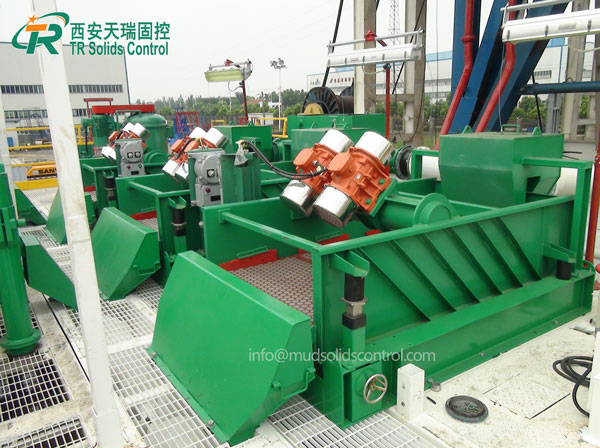
What is a Shale Shaker?
A shale shaker is a separation machine used on drilling rigs to remove drilled cuttings (rock fragments) from the circulating drilling fluid. It operates on the principle of mechanical screening. As the drilling fluid returns to the surface through the flow line, it carries with it the rock fragments generated by the drill bit. The shale shaker intercepts this mixture, allowing the liquid mud to pass through the screens while retaining the larger solid particles on top, which are then discarded.
The Core Functions
The primary function of a shale shaker is to separate solids from liquids. However, its impact on the drilling operation is multifaceted:
● Protecting Downstream Equipment: By removing large cuttings at the very beginning of the surface system, shale shakers prevent abrasive solids from damaging expensive pumps, centrifugal pumps, and mud mixers. This significantly reduces maintenance costs and downtime.
● Maintaining Mud Properties: Drilling fluid is an expensive commodity. Efficient shakers help maintain the desired viscosity and density of the mud by removing unwanted solids. This ensures optimal hole cleaning and wellbore stability.
● Environmental Management: In many jurisdictions, returning contaminated mud to the environment is prohibited. Shakers help manage waste by dewatering the cuttings, making them easier and safer to transport and dispose of.
● Enhancing Drilling Rate: When the mud is clean and free of excessive solids, the drilling rate tends to increase. This is because the drill bit can cut more efficiently without having to re-grind previously drilled material.
How Do They Work?
Modern shale shakers are sophisticated pieces of machinery. They typically feature a vibrating screen deck housed in a rectangular or circular body. The vibration is usually generated by one or more sets of eccentric weights (often called "shaker motors") that create a specific motion—such as linear, balanced elliptical, or circular motion.
The key to their effectiveness lies in the screen media. These screens come in various mesh sizes (measured in microns or API mesh numbers). The operator selects the screen based on the type of formation being drilled and the desired cut point. High-performance shakers often use composite screen frames to handle higher G-forces and provide longer screen life.
The Evolution of Technology
Gone are the days of simple, slow-vibrating trays. Today's shale shakers are high-G-force machines capable of processing massive volumes of fluid under harsh conditions. The introduction of fine-screen technology has allowed operators to remove smaller particles that were previously impossible to separate, thereby significantly improving the overall efficiency of the drilling operation.
In summary, while they may not be as glamorous as the derrick or the drill bit, shale shakers are indispensable for safe, efficient, and environmentally responsible drilling operations.